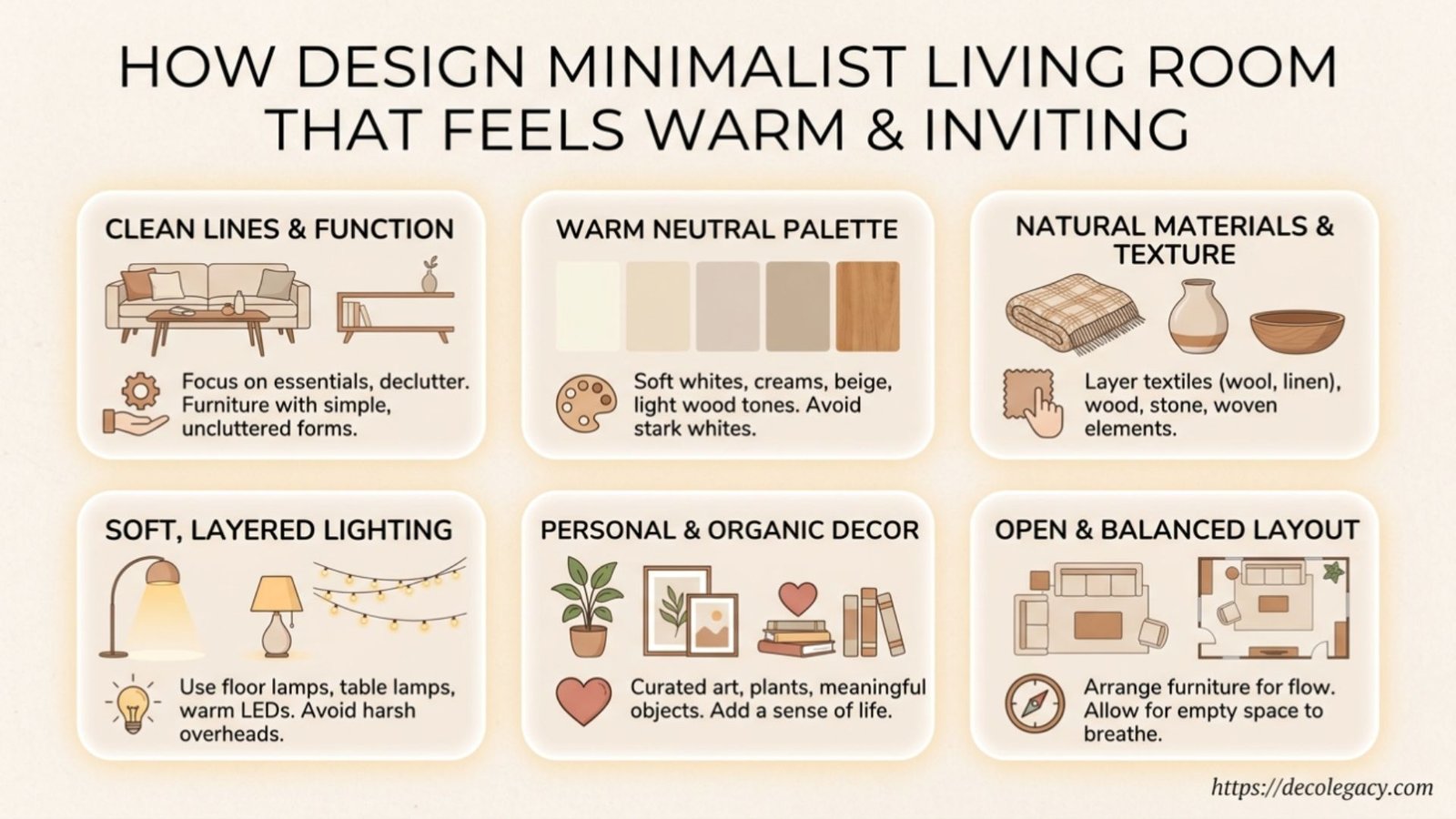
How Design Minimalist Living Room That Feels Warm & Inviting
Minimalism doesn’t have to mean cold or empty. A well-designed minimalist living room can feel just as cozy as a space filled with extra furniture and knick-knacks. The trick lies in choosing the right textures, colors, and layout so the room breathes without losing its warmth.
Many people assume fewer items mean less comfort, but that’s simply not true. With a few thoughtful touches, your minimalist living room can become the coziest spot in your home.
Minimalist Living Room Ideas for a Warm, Inviting Home
Minimalist living room ideas often get a bad reputation for feeling cold, bare, or a little too “showroom.” But real minimalism isn’t about owning nothing, it is about owning the right things and giving them room to breathe.
It is done well, a minimalist living room design can feel just as warm and lived-in as a maximalist one, just without the visual noise. This guide walks through practical, achievable ways to bring that balance into your own space, from layout and color to furniture and finishing touches.
What Makes Minimalism Feel Warm Instead of Sterile?
The difference between a cold minimalist room and a warm one usually comes down to four things: texture, color, lighting, and proportion. A room with only hard, glossy surfaces and stark white walls will always read as sterile, no matter how nice the furniture is.
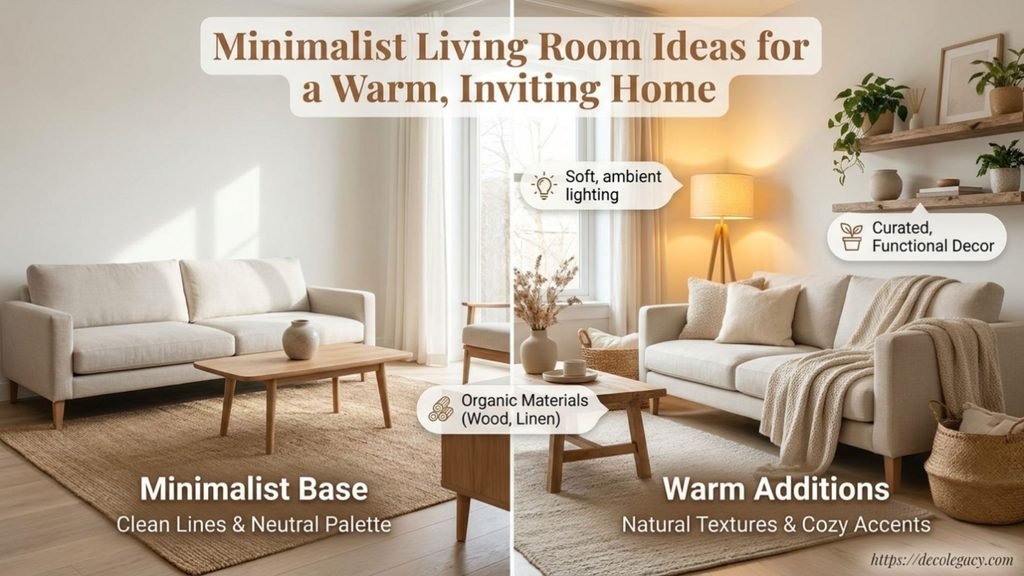
Add a chunky knit throw, a rug with some texture, warm-toned wood, and a couple of lamps instead of one overhead light, and the same layout suddenly feels comfortable. Warmth in minimalist decor for living room spaces isn’t an accessory, it is a design decision you make from the start.
Choosing a Minimalist Style That Fits Your Home
Not all minimalism looks the same, and that’s actually good news because it means there’s a version that fits your home and your personality.
- Modern minimalist leans on clean lines, neutral palettes, and a mix of matte and glossy finishes.
- Scandinavian minimalist favors light wood, soft textiles, and a cozy, functional feel.
- Boho minimalist blends natural materials and a few curated collected pieces without tipping into clutter.
- Luxury minimalist uses fewer, higher-quality materials like stone, leather, and solid wood for a refined look.
You do not have to pick just one, most real homes borrow a little from each.
Planning Your Minimalist Living Room Design
Before you buy a single throw pillow, it helps to actually plan the room instead of just removing things from it. Good minimalist living room design starts with function, not aesthetics — the look follows once the layout makes sense.
Define How You Use the Living Room
Think honestly about what happens in this room day to day. Do you host people often? Watch a lot of TV? Work from the sofa sometimes? Every piece of furniture you keep should support one of these real activities. If something doesn’t serve a purpose and doesn’t bring you real joy, it’s probably the first thing to go when you’re narrowing down your minimalist living room ideas.
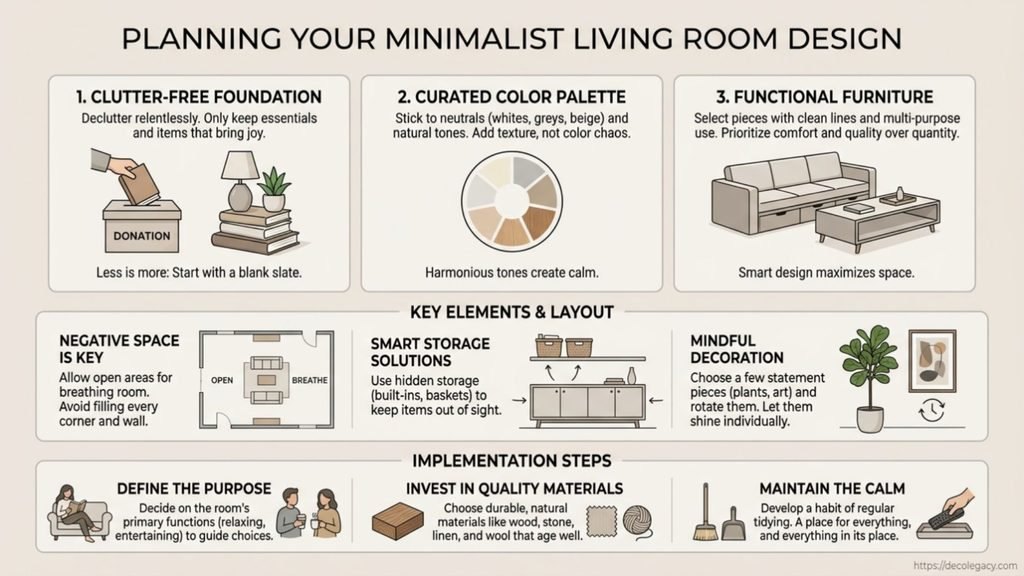
Create a Functional Layout With Comfortable Spacing
Layout is where a lot of minimalist rooms go wrong either too cramped or so empty it feels unfinished.
- Leave at least 30–36 inches of walking space between major furniture pieces.
- Float furniture away from walls when the room allows it, rather than pushing everything to the edges.
- Keep a clear sightline from the entrance to the main seating area.
- Avoid blocking natural light sources with tall furniture.
Build a Simple, Cohesive Color Palette
A calm palette is one of the fastest ways to make a room feel intentional. Stick to two or three main tones — usually a neutral base plus one or two warmer accents — and repeat them throughout the space in different materials. This keeps the eye moving smoothly instead of jumping between competing colors, which is really the whole point behind most minimalist living room ideas in the first place.
Essential Principles of Minimalist Interior Design Living Room
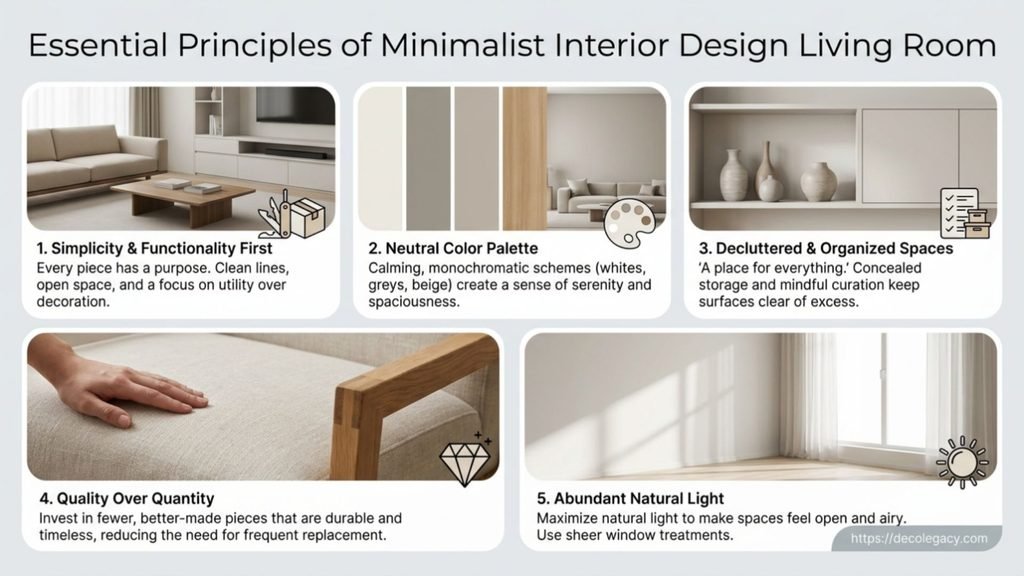
A few core principles show up again and again in good minimalist interior design living room projects, and understanding them makes every other decision easier.
Scale and Proportion
Furniture that’s the wrong size for a room is one of the biggest giveaways of an unplanned space. A sofa that’s too large will crowd walkways, while one that’s too small can leave a room feeling empty even with plenty of furniture in it. Measure your space first, then shop — not the other way around.
Balance and Negative Space
Empty space is not wasted space in minimalist design; it’s part of the design. Leaving areas of the room open gives your eye somewhere to rest and makes the furniture you do have feel more considered.
Texture and Layering
Flat, single-texture rooms tend to feel unfinished. Mixing a wool rug, linen curtains, a wood coffee table, and a couple of ceramic accessories gives depth without adding clutter — this is a key part of any warm minimalist living room approach.
Lighting and Visual Atmosphere
Overhead lighting alone almost always feels harsh. Combine ceiling light with a floor lamp and a table lamp so you can adjust the mood depending on the time of day.
Functionality Without Visual Clutter
Every piece should earn its spot. Choose items with clean silhouettes that double as storage where possible, so daily clutter has somewhere to disappear to.
Choosing Minimalist Living Room Furniture
Fewer pieces means each one has to work harder, which is why minimalist living room furniture decisions deserve more thought than usual.
The Right Sofa for a Minimalist Space
Look for a sofa with a simple silhouette — straight or gently rounded arms, low-profile legs, and a fabric that’s both durable and comfortable, like performance linen or a tight-weave boucle. Comfort should never be sacrificed for a “clean” look; a beautiful sofa nobody wants to sit on defeats the purpose.
Minimalist Coffee Tables and Accent Tables
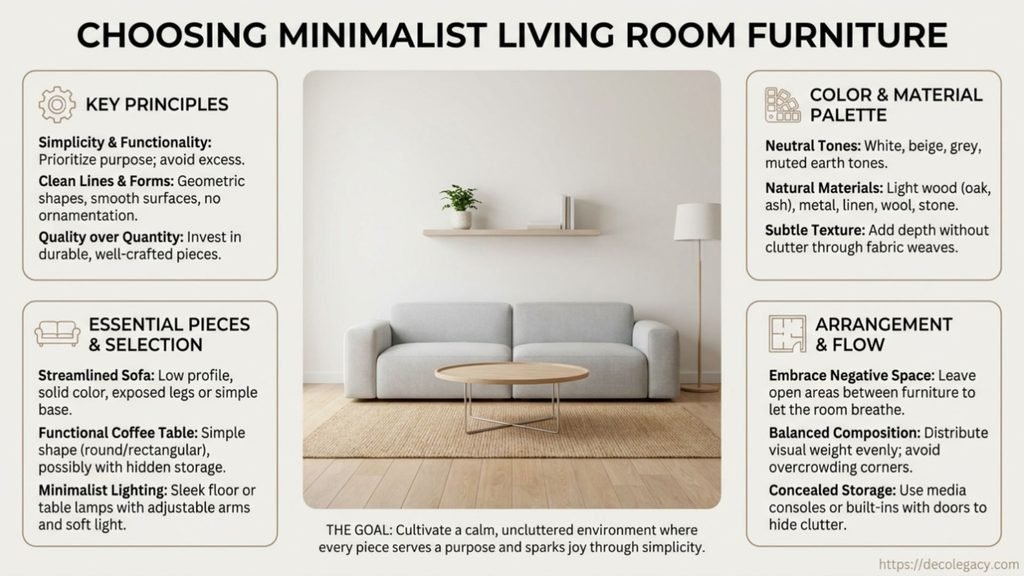
A round or oval table softens a room full of straight lines, while a rectangular one suits a longer sofa. Either way, keep the surface large enough for actual daily use — drinks, books, a tray — rather than choosing style over practicality.
Storage Furniture That Keeps Clutter Hidden
- A media console with closed cabinets instead of open shelving
- A storage ottoman that doubles as extra seating
- A slim console table with a drawer near the entry
- Built-in or floating shelves used sparingly, not filled edge to edge
Minimalist Living Room Decor That Adds Personality
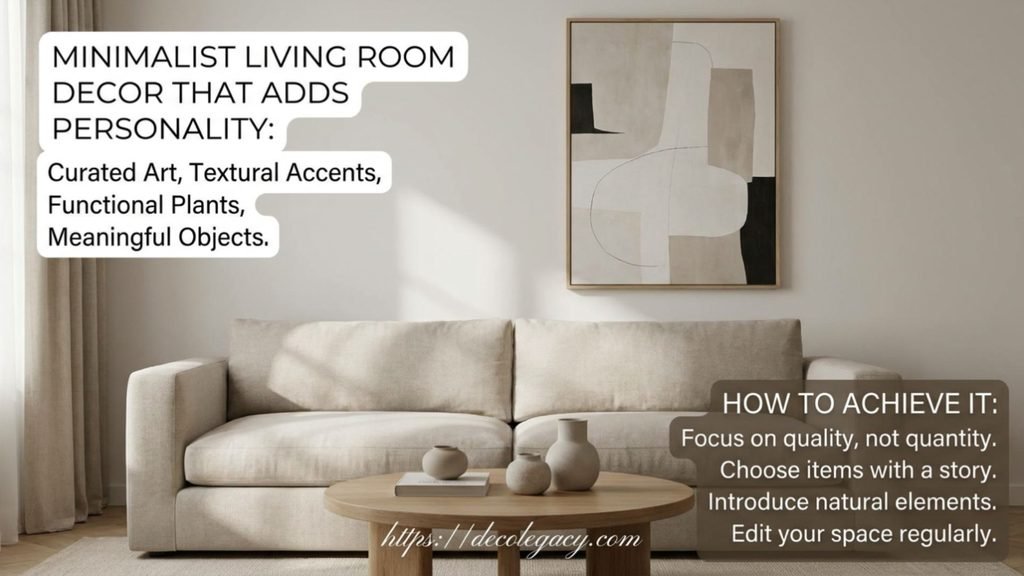
This is where a lot of people get nervous, worried that any decor at all will “ruin” the minimalist look. In reality, good minimalist living room decor is what keeps the room from feeling like a hotel lobby.
Rugs, Curtains, Pillows, and Throws
Soft materials do more to warm up a room than almost anything else. A textured area rug anchors the seating area, linen curtains soften hard window lines, and two or three pillows in complementary (not matching) tones keep the sofa from looking stiff.
Artwork and Decorative Objects
One or two large, meaningful pieces of art will always look better than a wall full of small unrelated frames. The same goes for objects on shelves — a single sculptural vase or bowl says more than five small trinkets competing for attention.
Plants and Natural Elements
A tall plant in the corner or a small cluster of greenery on a side table brings life into a room that might otherwise feel too controlled. Natural elements are one of the easiest, cheapest upgrades to any minimalist space.
Modern Minimalist Living Room Design
Modern minimalist living room design leans into architecture, straight lines, and a slightly cooler, more polished palette than Scandinavian or boho styles.
Modern Minimalist Living Room Ideas
Think low-profile furniture, a mix of matte and glossy black or wood finishes, and a restrained accent color like deep green or rust used in just one or two spots. The goal is a room that feels sharp and current without trying too hard.
Modern Minimalist Living Room Interior
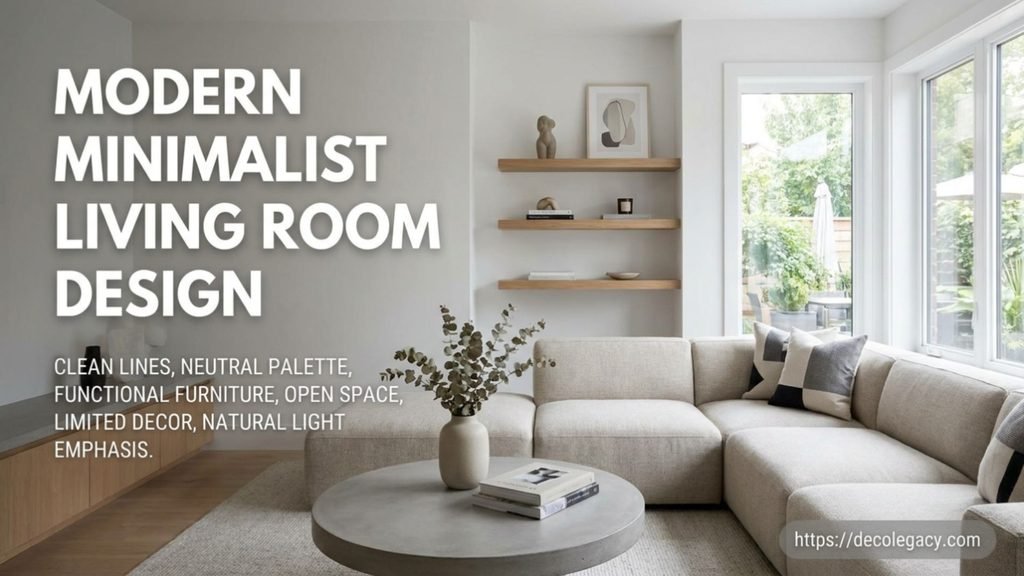
Flooring, walls, and lighting should all work together rather than compete. Wide-plank flooring, simple baseboards, and recessed or track lighting all support a modern minimalist living room interior without pulling focus from the furniture.
Modern Minimalist Living Room Neutral Tones
Layering whites, beiges, taupes, and soft grays creates depth even in a fully neutral room. The trick with modern minimalist living room neutral tones is variation — mix warm beige with cool gray so the palette doesn’t fall flat.
Creating a Cozy Minimalist Living Room
A cozy minimalist living room proves that “less” doesn’t have to mean “less comfortable.” This is often the style people actually want, even if they start out searching for something more austere.
Warm Cozy Minimalist Living Room
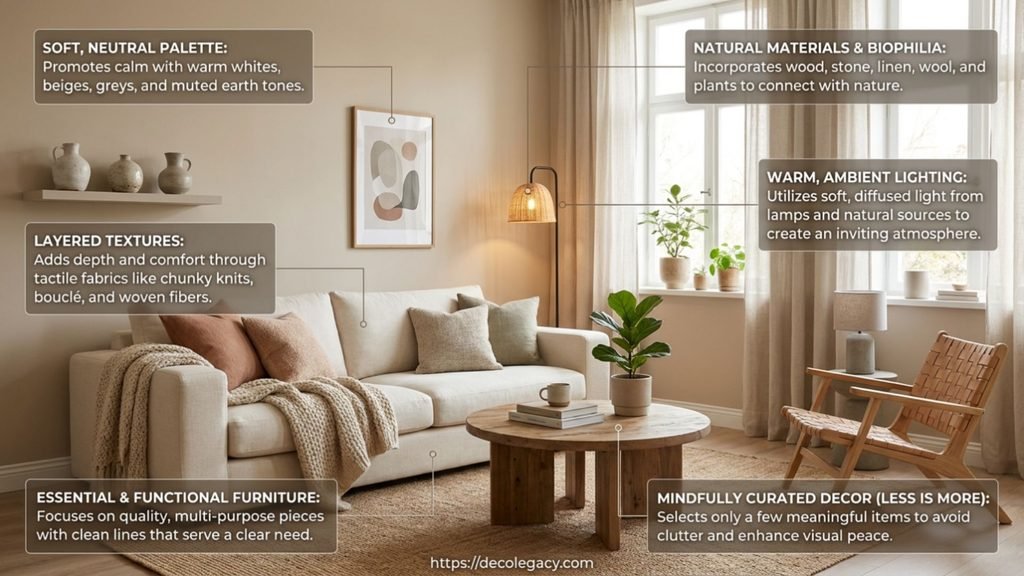
A warm cozy minimalist living room usually mixes natural wood tones, soft textiles like wool and boucle, and warm-white lighting instead of cool or bright white bulbs. Candles, a soft throw blanket, and low lighting in the evening go a long way.
Minimalist Cozy Living Room
Clean lines don’t have to feel stiff. Choose furniture with slightly rounded edges and soft upholstery so the minimalist cozy living room look still invites people to sink into the sofa rather than sit carefully on the edge of it.
Warm Minimalist Living Room Color and Texture
Earthy tones — terracotta, warm taupe, olive, soft browns — paired with layered textures like linen, jute, and wool are the backbone of any warm minimalist living room. This combination avoids the flat, cold look that people usually associate with strict minimalism.
Small Minimalist Living Room Ideas
Small spaces actually benefit the most from minimalist thinking, since there’s simply less room for extra clutter to accumulate.
Small Cozy Minimalist Living Room
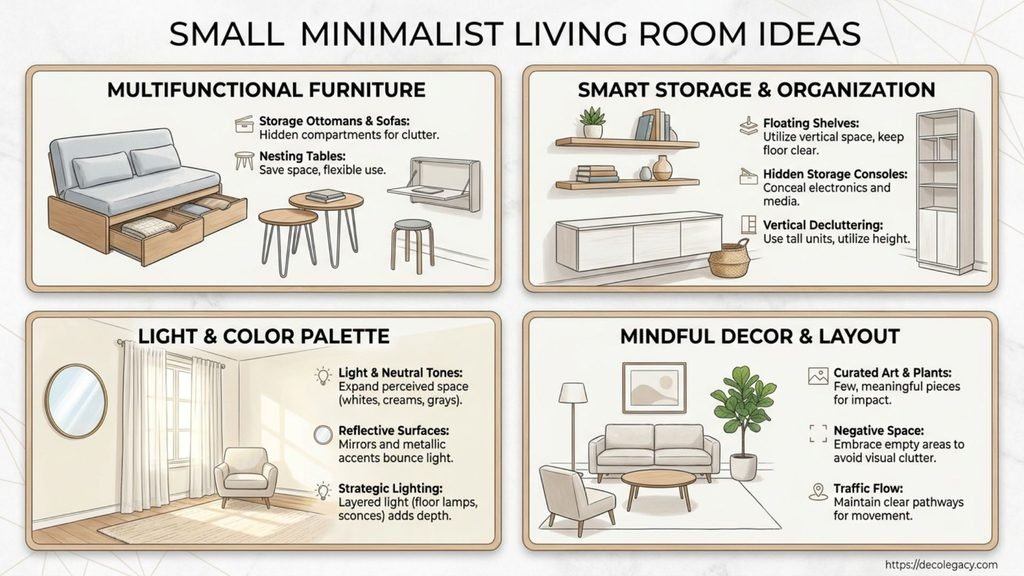
A small cozy minimalist living room works best with furniture scaled to the room — a loveseat instead of a full sofa, a smaller round coffee table, and soft lighting instead of one large overhead fixture.
Small Minimalist Living Room
- Choose furniture with visible legs to keep the floor line open
- Use a large mirror to bounce light around the room
- Stick to a tighter color palette to avoid visual chopping
- Keep the coffee table lower and smaller in scale
Minimalist Small Living Room Ideas
Vertical storage — tall, narrow bookshelves or wall-mounted cabinets — frees up floor space while still giving you somewhere to put things. Multifunctional furniture, like a bench that opens for storage, is especially useful in these minimalist small living room ideas.
Minimalist White Living Room
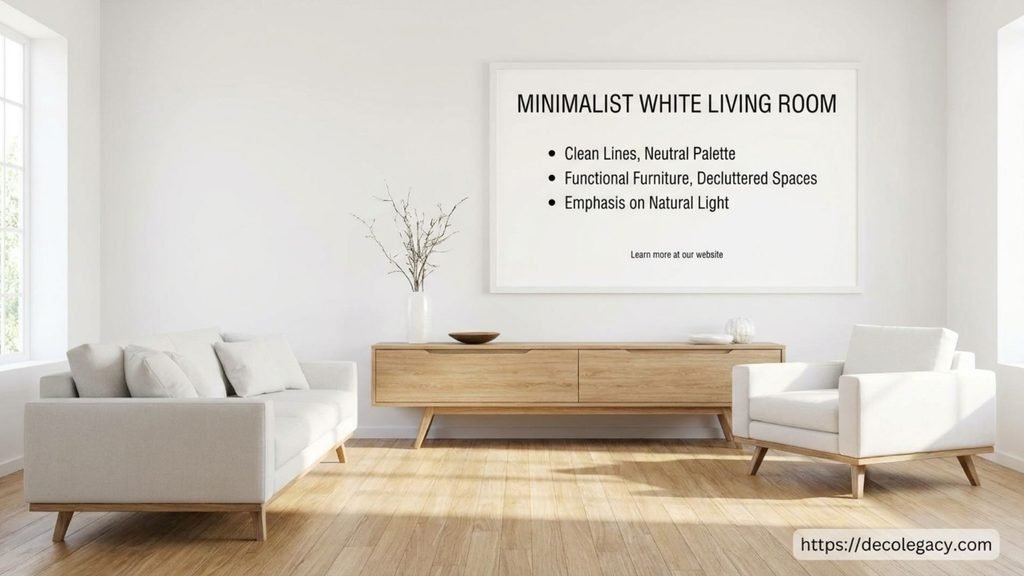
An all-white palette is one of the most requested minimalist living room ideas, but it’s also the easiest to get wrong if warmth isn’t planned in from the start.
Adding Warmth to an All-White Interior
A minimalist white living room needs contrast to avoid feeling flat or clinical. Bring in warm wood furniture, woven baskets, linen textiles, and a couple of plants. Warm-white or soft-yellow lighting also makes a huge difference over cool, blue-toned bulbs.
Scandinavian Minimalist Living Room
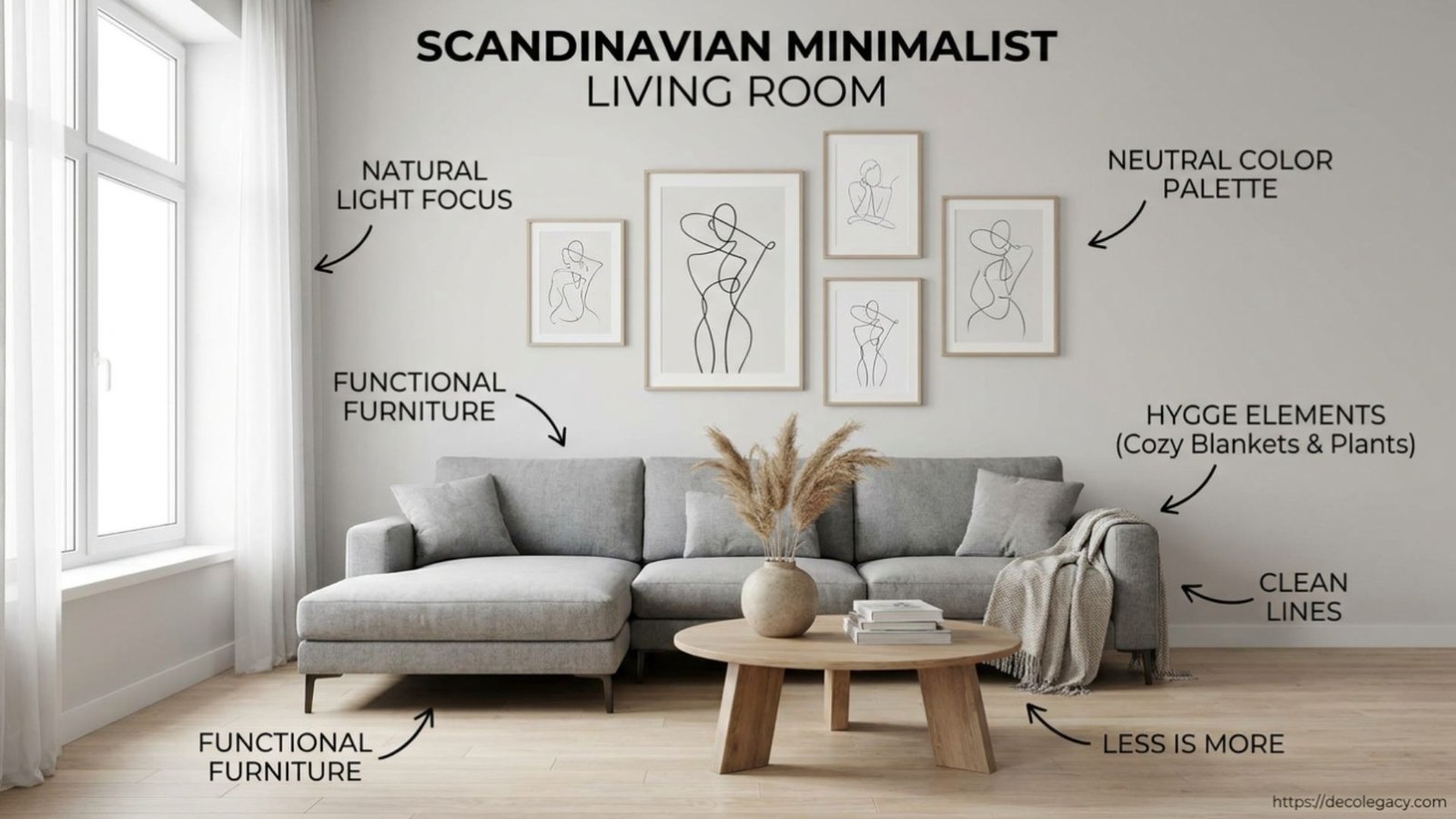
The scandinavian minimalist living room style is probably the closest thing to “minimalism done cozy” — it was basically built around long winters and the need for comfort indoors.
Key Scandinavian Elements to Include
- Light, natural wood furniture (oak, ash, birch)
- Soft neutral textiles in wool, sheepskin, or cotton
- Simple, functional furniture shapes with tapered legs
- Candles and warm lighting used generously
Boho Minimalist Living Room
A boho minimalist living room takes the relaxed, layered feel of bohemian style and reins it in with a more restrained, minimalist eye.

Balancing Natural Texture and Decorative Restraint
Woven rattan, macrame, and a few well-placed plants bring in boho character without crowding the space. The key is choosing a handful of natural, handcrafted pieces rather than filling every surface — restraint is what separates boho minimalism from full-on maximalism.
Read More : 580+ Boho Living Room Ideas That Feel Cozy & Effortless
Luxury Minimalist Living Room
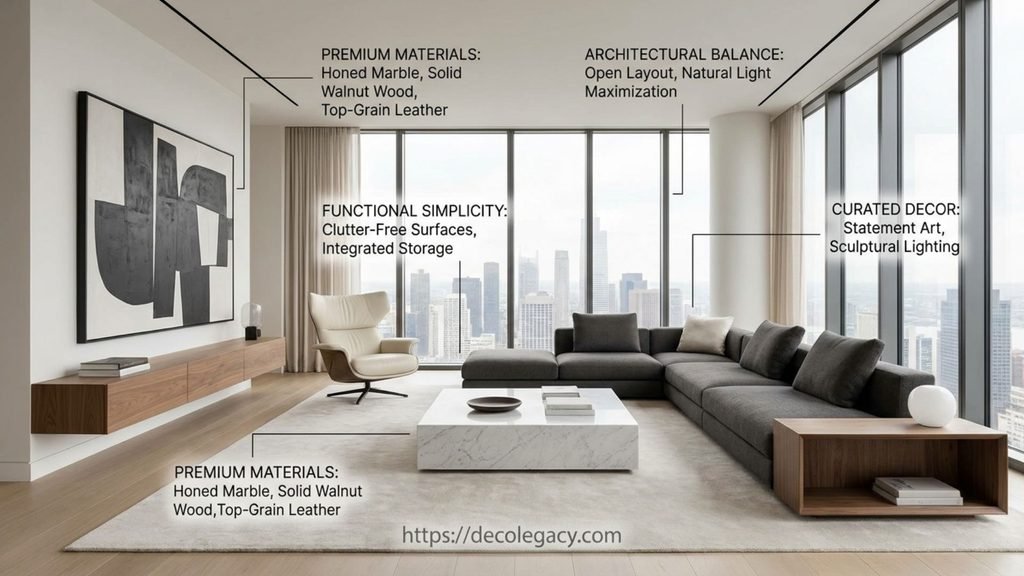
A luxury minimalist living room isn’t about having more — it’s about having better. Quality and craftsmanship do the talking instead of quantity.
Materials That Make Minimalism Feel Expensive
Natural stone, solid wood, linen, leather, and brushed or matte metal finishes all read as high-end, even in small doses. A single stone side table or a leather accent chair can elevate an entire room.
Creating Luxury Without Adding Clutter
Invest in one or two statement pieces rather than several mid-range ones. Good lighting, proper proportion, and visible craftsmanship (like exposed wood joinery or hand-stitched upholstery) matter more than the number of items in the room.
Modernist Minimalist Living Room
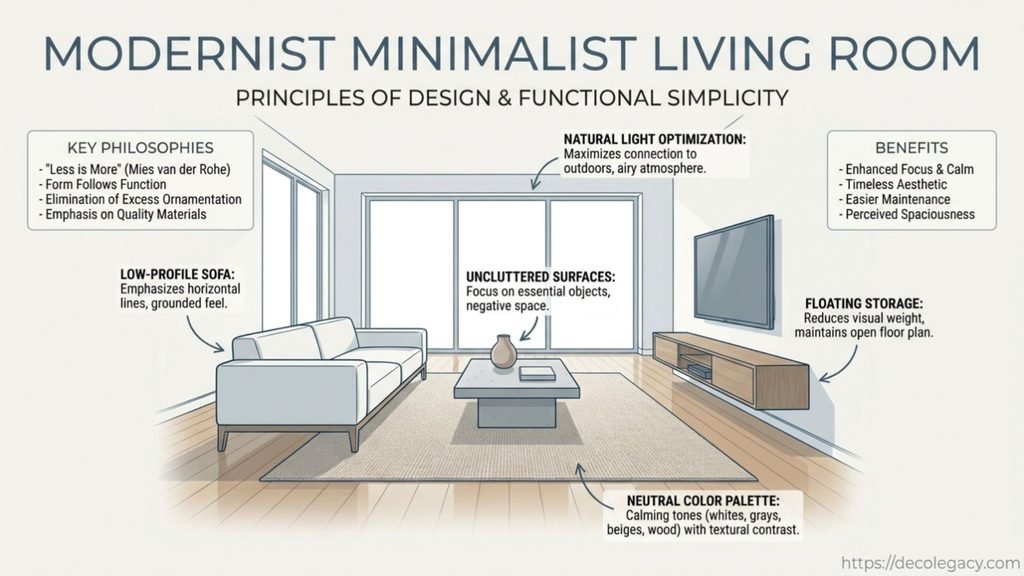
The modernist minimalist living room takes cues from architecture — think mid-century and contemporary design movements that valued structure and honest materials.
Modernist Forms, Materials, and Architectural Details
Strong geometric lines, open floor plans, and materials left in their natural state (exposed concrete, raw wood, unpolished metal) define this look. Furniture tends to be sculptural rather than purely decorative, with form and function treated as one and the same.
Minimalist Living Room Interior: Putting Everything Together
Once you’ve made all the individual decisions — palette, furniture, lighting, decor — the last step in any minimalist living room interior project is making sure they actually work together as one cohesive space rather than a collection of separate good ideas.
How to Layer Color, Texture, Lighting, and Decor
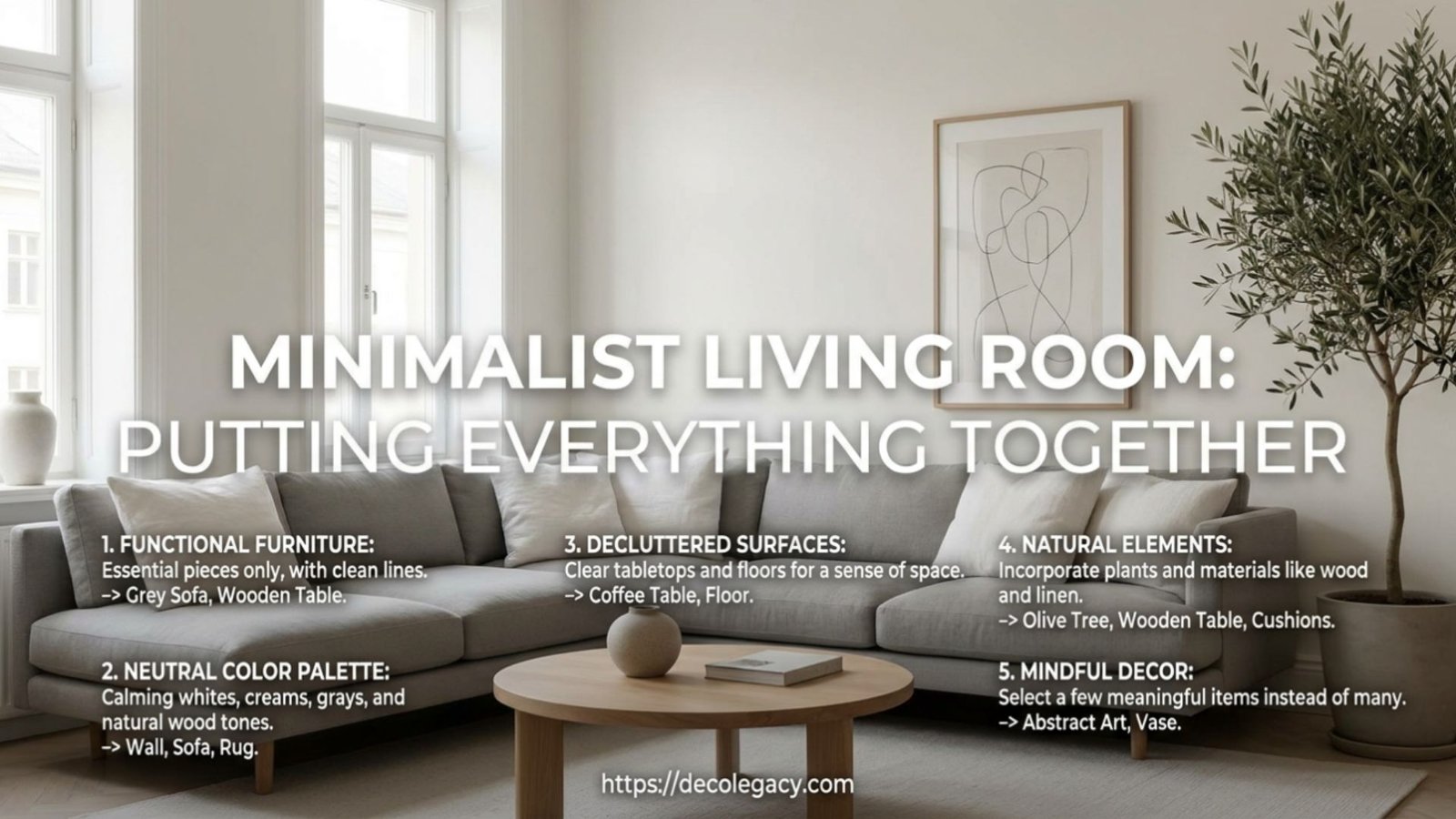
Start with your base neutral, layer in one or two accent colors, add texture through textiles, and finish with lighting that supports the mood you want. Step back often while you’re arranging the room — it’s much easier to spot what’s missing (or what’s too much) from a distance.
Creating a Focal Point Without Overdecorating
Every room benefits from one clear focal point — a fireplace, a piece of art, a statement light fixture. Arrange the rest of the room to support that focal point instead of competing with it.
How to Choose the Right Lighting
Lighting is one of the most overlooked parts of minimalist design, yet it can make or break how warm the finished room actually feels.
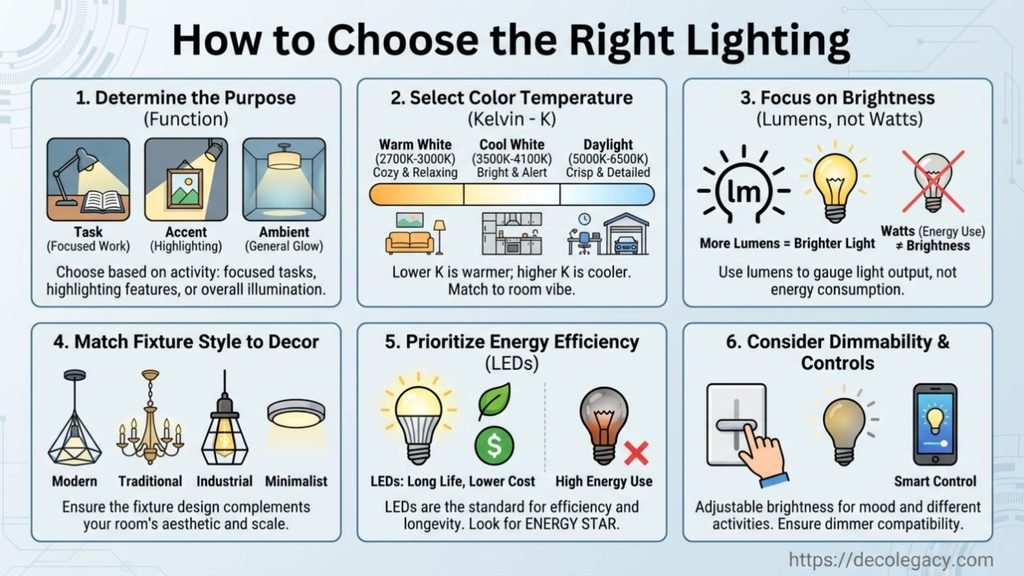
Layered Lighting for Evening Comfort
Combine at least three light sources — ceiling, floor, and table — so you’re never relying on one harsh overhead light after dark. Dimmer switches are a small investment that make a noticeable difference in how relaxed the room feels in the evening.
How to Make Minimalism Work for Everyday Life
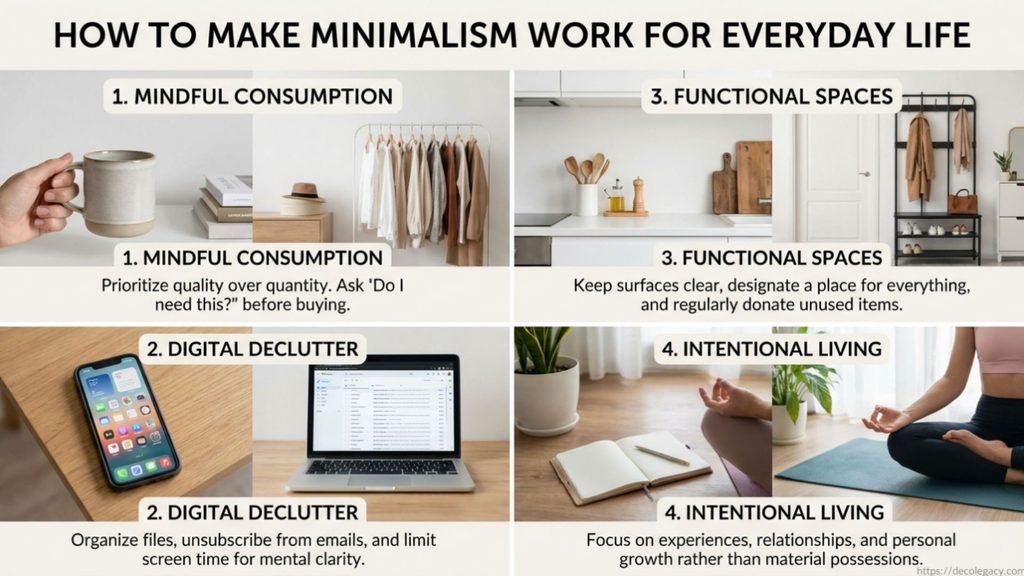
Minimalism has to survive real life, not just look good in photos. That means planning around the people (and pets) who actually use the room.
Kid-Friendly and Pet-Friendly Minimalist Design
Choose performance fabrics that wipe clean, durable rugs that hide stains, and closed storage instead of open shelving for anything breakable. A minimalist room can absolutely handle a busy household — it just needs the right materials from the start.
Sustainable Choices for Minimalist Interiors
Minimalism and sustainability naturally overlap, since both are about buying less and buying with intention.
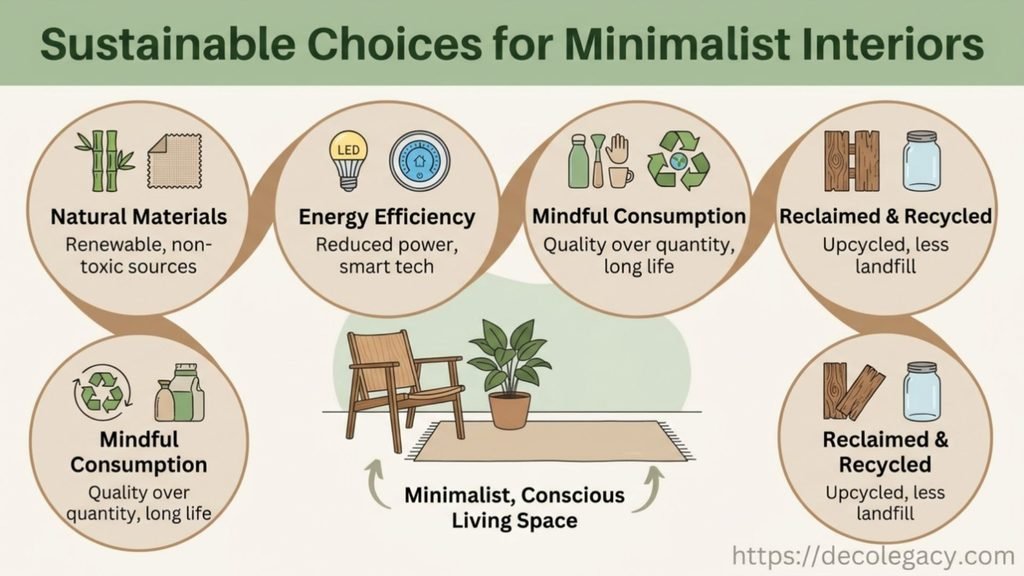
Buy Less, Choose Better
Choose solid wood over particleboard, natural fibers over synthetic ones, and pieces built to last rather than trend-driven items you’ll want to replace in a year or two. It costs more upfront but almost always works out cheaper — and better for the planet — in the long run.
Common Minimalist Living Room Mistakes to Avoid
Even with the best intentions, it’s easy to slip into a few common traps when designing a minimalist space.
Making the Room Too Empty
Minimalism is not the same as emptiness. A room with no texture, color, or personal touches will feel unfinished rather than intentional, no matter how “clean” it looks on paper.
Using Only One Color or Texture
A single flat tone with no variation reads as boring rather than sophisticated. Even subtle contrast — a slightly darker rug, a lighter throw — keeps the eye interested.
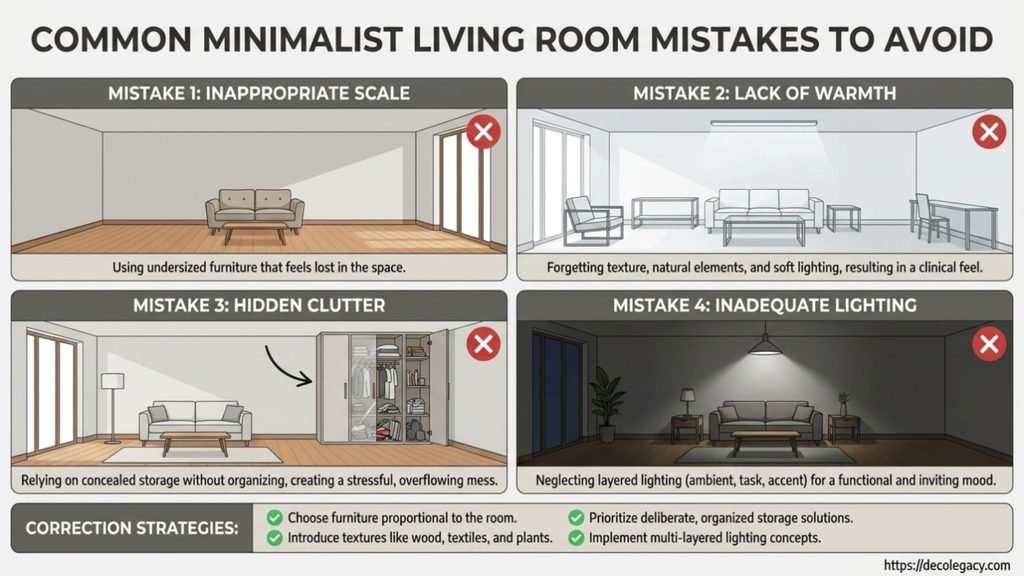
Choosing Furniture That Is Too Large or Small
Always measure the room before buying furniture. Oversized pieces block circulation, while undersized ones can leave a room feeling awkward and unbalanced.
Ignoring Lighting and Layered Illumination
A beautifully designed room under one harsh overhead light will still feel flat and unfinished. Lighting deserves the same attention as furniture and color.
Sacrificing Comfort for Appearance
If the sofa isn’t comfortable or the lighting is too dim to read by, the design has failed no matter how good it looks in photos. Function should never take a backseat to appearance.
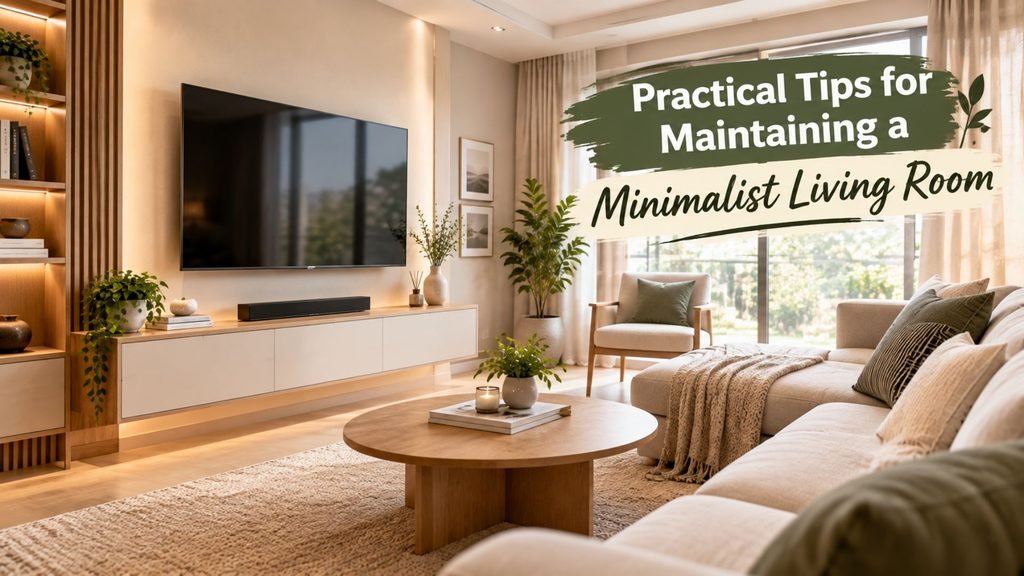
Practical Tips for Maintaining a Minimalist Living Room
Designing the room is only half the job — keeping it feeling calm and organized is an ongoing habit.
Create a Simple Decluttering Routine
Set aside a few minutes each week to put things back where they belong and remove anything that’s drifted into the room but doesn’t belong there.
Use Intentional Storage
Give everyday items remotes, chargers, mail a specific home so they don’t end up scattered across surfaces. A tray, a drawer, or a small basket works better than no system at all.
Follow a One-In, One-Out Approach
Before bringing a new item into the room, consider what might leave. This one habit does more to keep a minimalist living room design from slowly filling back up than almost anything else.
Conclusion
Creating a minimalist living room that feels warm and inviting comes down to balance. You don’t need to fill every corner to make a space feel lived-in and comfortable. Soft textiles, natural light, and a neutral color palette go a long way toward achieving that cozy vibe.
Focus on quality over quantity, and let each piece in the room serve a purpose. In the end, a minimalist living room isn’t about having less — it’s about making room for what truly matters.
FAQs
Does a minimalist living room have to feel empty or cold?
Not at all. Layering soft textiles like throw blankets, rugs, and cushions can add warmth without cluttering the space.
What colors work best for a warm minimalist living room?
Neutral tones like beige, cream, warm gray, and soft browns tend to create a cozy atmosphere while keeping the space simple.
How much furniture should I have in a minimalist living room?
Stick to essential pieces only a comfortable sofa, a coffee table, and maybe one accent chair are usually enough.
Can I use plants in a minimalist living room?
Yes, a few well placed plants can add life and warmth without overwhelming the minimalist aesthetic.
What kind of lighting works best for this style?
Warm, soft lighting from lamps or dimmable fixtures works better than harsh overhead lights for a cozy feel.
How do I avoid my minimalist living room looking boring?
Add personality through texture, a statement piece of art, or a unique accent chair, while still keeping the overall design simple.